In 2025, Google’s AI-generated answers have taken up to 40 percent of our web traffic. Still, in this blog we will explore why writing 500-word posts is no longer enough, and we will look at every possible technique to recover that lost traffic.
If your clicks are dropping, you might think the solution is to publish more blog posts. You are probably asking yourself how long should a blog post be to rank on Google and keep your audience engaged.
The truth is that writing over 2,000 words is no longer effective if you do not have an SEO content strategy that connects blog writing with a full plan to help your project grow, even in the difficult landscape we face as creators of informational content who rely on it to sell our services.
In this session I will walk you through how many words a blog post should be, why length matters and when it does not, how to organise all the content you want to produce into a clear and effective strategy for your website, and how professional content writing services can help you hit the mark if you are short on time. Let’s get a move on!
Ideal and Average Blog Post Length for SEO
When it comes to SEO, longer blog posts tend to perform better in search rankings. Studies show that top-ranking articles are often between 1,500 and 2,400 words long. In fact, a HubSpot analysis found that the ideal blog post length for SEO is around 2,100–2,400 words. That’s much longer than the 500-word posts many people consider “standard.”
Longer posts generally rank higher because they can cover a topic in greater depth, include more relevant keywords, and keep readers on the page longer, all positive signals for SEO.
However, “ideal length” is not a hard rule. The average blog post word count across industries hovers around 1,000 –1,500 words. This suggests that blog size varies widely. For instance, a quick news update might be 600 words, whereas an in-depth guide could be 2,500+ words. Aim for at least 1,000 words for most posts as a good rule of thumb, but be prepared to go longer if the topic demands it. Remember, your goal is to thoroughly answer the reader’s query. In 2025, comprehensive content is winning, many successful blog articles even exceed 2,000 words to provide maximum value.
(Tip: If you’re unsure, research the average blog post length of top Google results for your target keyword. If the top articles are long-form, you’ll likely need a longer post to compete.)
Short-Form vs Long-Form Blog Posts
If you’re into blogging, you’ve probably heard the term content pillars. These are your big, chunky posts packed with loads of useful info. They’re usually long, detailed, and cover a broad topic. The best part? They give you the perfect base to create smaller, more specific posts that dive into the subtopics you touched on in your pillar content.
This approach helps you link related posts together, what we call interlinking. But it’s not about throwing links around randomly. To do it right, you need a solid information structure for your website. Without that, doing SEO properly is nearly impossible.
Now, not every blog post needs to be massive. It’s helpful to know the difference between short-form and long-form content when figuring out how many words your blog should have. Here’s a quick guide to blog “sizes” and when to use each one.
Short-form blog posts (approx. 300–800 words)
Short blog posts are quick and to the point. They’re great for things like updates, product news or answering one simple question. Because they’re easy to read and don’t take much time, they work well when your reader just wants a fast answer.
But here’s the catch. Short posts usually don’t show up on Page 1 of Google, especially in competitive topics. That’s because they often don’t go deep enough or include the keywords Google wants to see. A post that’s around 300 to 500 words long is roughly a single page of text, which is pretty light for blog content.
Long-form blog posts (approx. 1,000–2,500+ words)
Longer blog posts are where the real magic happens. Think step-by-step guides, full-on tutorials, deep-dive case studies or those list-style posts that go beyond “Top 5.” These types of posts keep readers hooked for longer and help build your authority on a topic. Plus, Google loves them. Why? Because longer posts usually answer more complex questions and give more value than short ones.
Now, what counts as “long”? Anything from 1,000 words up, but the sweet spot is often around 1,500 or more. That said, don’t just write more for the sake of it. The extra space should be packed with useful info, not filler. Keep it sharp, helpful and focused on your reader’s needs.
So, how long should your blog post be? It really depends on your goal. Quick topics or simple questions might only need a few hundred words. But if you’re going after big keywords or covering something deep, longer posts are usually the way to go. Most solid content strategies mix both: short posts for quick wins and longer ones for evergreen impact that keeps working over time.
Key Factors to Consider antes de escribir el Mejor Blog
What if, instead of asking How long should a blog be for optimal impact?, you asked What kind of content actually answers my users’ search intent? These two questions may sound alike, but the answers are completely different.
Several key factors help determine what makes a blog post valuable for your readers and what makes Google rank it above the rest.
Search Intent & Audience Needs
Consider why someone is searching for your topic. Are they after a quick definition or a full step-by-step guide? The intent behind the search will help you decide how long your post should be. If the user just needs a quick fact, a short post might be enough. Google is happy to rank a 500-word article if it answers the question properly. But if the topic is broad or the reader wants to learn more, you’ll need a longer blog to meet their needs.
Always put yourself in the reader’s shoes. Think about what your audience expects. For example, a beginner’s or “ultimate” guide needs more explanation and words than a post aimed at experts. Matching your word count to search intent means your content won’t feel too short or drag on too long.
But how do we figure out the user’s search intent? Here are two ways to do it. The first one is free, but takes more time. Still, by the time you sit down to write your blog, you’ll know your audience so well that you’ll be creating posts with ease.
The second option is paid, using Ahrefs’ keyword tools. This method saves you loads of time, and I’ll explain why it might be worth checking out.
Search on Google like you were the user.
It’s as easy as doing a Google search. Just pick the keyword you want to write your blog about and search it in incognito mode. This gives you clean results, without your past searches affecting what Google shows you.
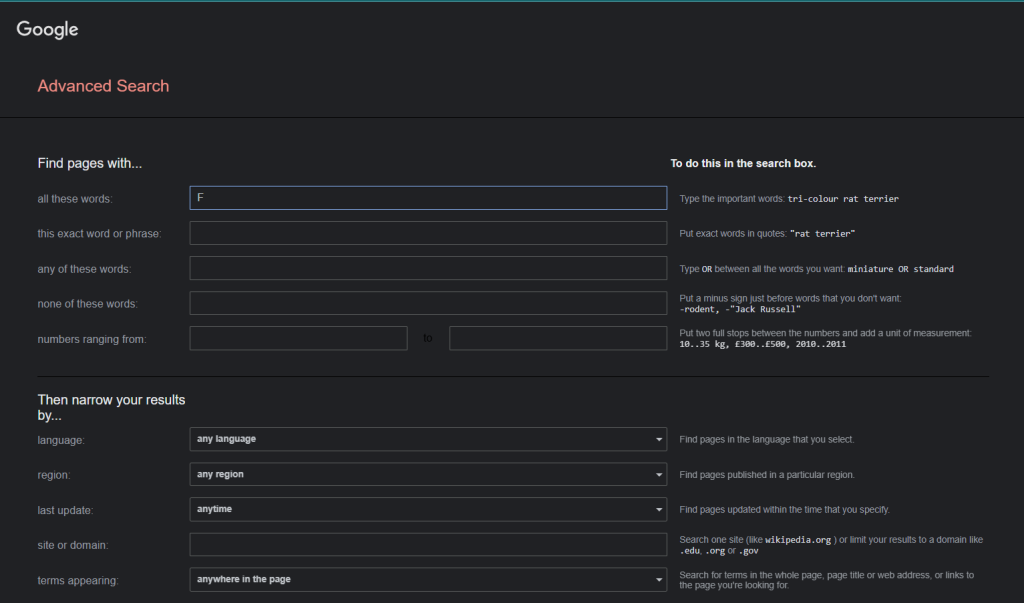
If you’re writing for a different language or country, you can use Google’s Advanced Search. There, you can choose the region and language that match your audience.
After searching, open a spreadsheet and write down all the result types you see for that keyword. These are called rich snippets. The most common ones include Local listings, Videos, Questions, Text blocks, Ordered lists, Images and Courses.
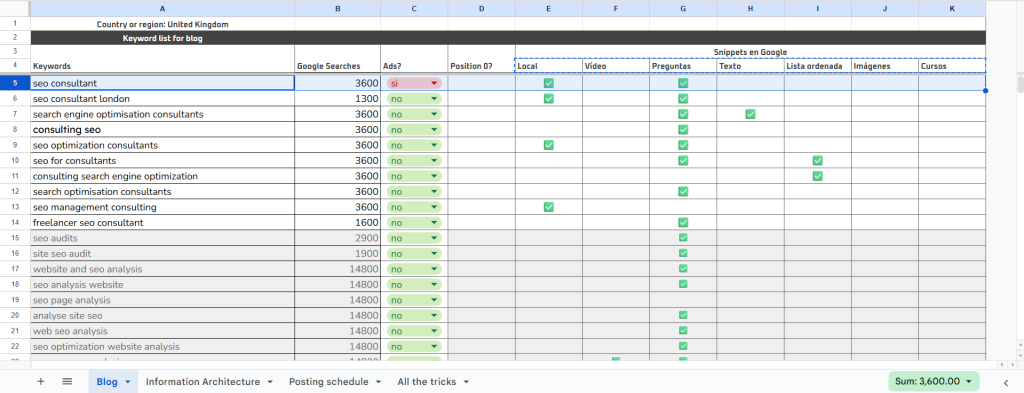
You can use this template if you book a private class with an SEO consultant in London.
These results help us understand how people search and what they expect to find. This is called search intent. For example, if you search for SEO consultant London, you’ll likely see a map, FAQs and images. That shows the intent is to find a service in a specific location.
You should do this with every keyword before writing. It helps you see what kind of content to create. If the search intent is informative, a blog post is a great fit. If it’s more commercial or about buying something, you may want to create a landing page or use that keyword for a product category.
Topic Complexity
Some subjects are inherently complex and demand detail. If you’re covering a broad topic (e.g. “content marketing strategies for small businesses”), you’ll likely end up with a long post to cover all sub-points. Conversely, a narrow topic (e.g. “how to format an H1 tag in HTML”) might be thoroughly answered in a few hundred words plus an example.
Let the scope of the topic guide your word count. cover the topic completely and you’ll arrive at the right length naturally.
SEO Competition
Look at what the top-ranking articles for your keyword are doing. If all the Page 1 results have ~2,000 words, a 300-word post won’t cut it. To compete, your content should be of similar length and quality (or better). Checking the word count of competing articles can give you a target range. This doesn’t mean longer is always better, but it provides a benchmark.
If competitors are thorough, you should be too or find a way to deliver more value in fewer words. It’s about standing out: if others have shallow 800-word posts, perhaps your 1,500-word comprehensive post will outrank them by satisfying readers more.
Your Goals for the Post
Identify what you want to achieve with the blog. Common goals include driving organic traffic (SEO), generating social shares, educating your customers, or converting readers into leads. For SEO and thought leadership, longer posts (1000-2000+ words) generally work best because they attract more backlinks and keep visitors engaged longer, which can improve rankings.
For engagement or conversion, you also need quality content sometimes medium-length posts (~1000 words) that get to the point can convert better if readers tend to skim. Match the word count to the goal: e.g. if your goal is to answer a FAQ quickly for customer support, a concise 400-word article is fine; if the goal is to rank for a competitive keyword, aim higher with word count.
Update Frequency & Resources
Be realistic about how much content you can produce. A 3,000-word masterpiece is great, but not if it means you only post once a year. Sometimes shorter posts allow for a consistent posting schedule, which can also benefit your blog’s overall performance.
If you’re a solo blog writer, you might mix lengths to maintain consistency. On the other hand, if you have a content writing agency or team behind you (or budget to use writing services), you can manage regular long-form posts. Consider outsourcing (more on that later) if longer posts are too time-consuming, it’s better to have high-quality content at the right length than to cut corners.
In summary, how many words your blog post should have depends on context. Evaluate the intent, complexity, competition, and your capacity. A good practice is: write enough words to fully answer the question or cover the topic, and not a word more or less than needed. That might be 800 words or 2,000+ words, depending on the situation. If you keep the focus on meeting the reader’s needs, the length will naturally fall into place.
(Remember: There is no strict minimum or maximum word count enforced by Google. A short post can rank if it’s exactly what users need. A long post can fail if it’s full of fluff. The key is to provide value.)
Quality matters more than quantity.
It’s vital to understand that quality matters more than quantity. Blog length alone won’t guarantee success. Google’s own experts have stated that word count is not a direct ranking factor. In other words, Google doesn’t simply reward a post for being longer. As Google’s John Mueller put it, “Word count is not indicative of quality. Some pages have a lot of words that say nothing, and some have very few words that are very important.”
What does this mean for you? It means you shouldn’t pad your article with redundant content just to hit an arbitrary word count. Writing “more content for the sake of it” is not advised. Readers will notice fluff and filler, and they’ll bounce away. Instead, prioritise quality and readability.
A 500-word post that is insightful and answers a query completely will outperform a rambling 2,000-word post that goes off-topic. Likewise, an ultra-long blog post isn’t penalised for length, but it will only rank well if it’s packed with helpful insights and remains engaging throughout.
Here are some tips to ensure quality over quantity:
Make every word count
Before adding another paragraph, ask if it provides new value or insight. Avoid repetition. Trim fluff. Aim for clarity and depth.
Structure for readability
Break up long text with clear subheadings, bullet points, and visuals if possible. A sensible formatting structure keeps readers engaged, especially in long-form posts.
Cover the topic thoroughly
Don’t cut a post short if the topic hasn’t been fully addressed. It’s better to write a 1,500-word article that truly answers all related questions than to post 500 words that leave readers needing more.
Don’t be afraid of brevity for simple topics
If you can genuinely answer the query in 600 words with a well-written piece, do so. There’s no rule saying “a blog post must be 2,000 words.” In fact, Google will favor a concise page if it best satisfies the user’s search intent.
Edit and refine
Quality comes from good editing. After drafting, revise to remove any unnecessary content. Ensure the post flows logically and every section is valuable.
In essence, the ideal blog post length is the length that delivers maximum value to your audience. Use word count as a guideline, not a goal in itself. This philosophy is echoed by SEO experts and tools (like RankMath, which advises aiming for 300+ words but always putting quality first).
High-quality content not only pleases readers but also naturally includes the information and keywords that search engines need to rank the page.
(If maintaining high quality in a long post feels daunting, the next sections will show how content writing services or blog writers can help, ensuring you get both quality and sufficient word count.)
How Do Writing Services Help Your Content?
Creating lengthy, top-notch blog posts regularly can be challenging, especially for businesses juggling many tasks. This is where professional blog writing services and content writing agencies come in.
Such writing services can save you time and ensure your content hits the ideal length without sacrificing quality. Here’s how working with a content writing company or agency can benefit your blog:
Expert writers who get it right
A reputable content writing agency employs experienced blog writers who know how to craft engaging, informative articles. They can expand on a topic to the necessary word count while keeping the content coherent and interesting.
These writers understand how to avoid fluff, instead, they enrich the post with research, examples, and insights. With pros handling your content, you’ll get well-structured articles that read smoothly, whether it’s a 500-word update or a 2,000-word guide.
SEO optimisation built-in
Many SEO blog writing services specialise in creating content that isn’t just long, but also search-engine friendly. Professional writers will naturally incorporate keywords (like those related to your business or topic) and follow on-page SEO best practices. They know how to use headings, meta descriptions, and links effectively.
An SEO article writing service can ensure that your blog post length is ideal and that every section is optimised to rank. This means you get content that appeals to readers and checks the SEO boxes a win-win for achieving organic traffic.
Consistent output and fresh ideas
Maintaining a company blog with regular long-form posts is easier when you have a content writing company as a partner. They can deliver content on a schedule (e.g. weekly blogs, monthly whitepapers) so you stay consistent.
Consistency is key for building readership and SEO momentum. Plus, a team of writers can bring fresh perspectives and topic ideas to your content calendar. Using content writing services ensures you won’t run out of quality content, even if you don’t have time to write it all yourself.
Focus on your core business
By outsourcing blog writing, you free up your time to focus on what you do best whether that’s running your business, developing products, or serving customers. Writing services take the heavy lifting of content creation off your plate.
You still set the direction and approve topics, but you don’t have to draft the 2000-word article yourself. This is not only convenient but can be cost-effective: instead of spending hours writing, you can invest that time elsewhere and let professional blog writing service providers efficiently produce the content.
Scalable and flexible
Need five long-form articles this month, but only one next month? A content writing service can scale with your needs. You can purchase blog articles one by one or in bulk, as needed. Many agencies offer packages or one-off content articles for sale, giving you flexibility.
This means you can ramp up content around key seasons or campaigns (e.g. producing more blog posts when launching a new product or targeting a new keyword cluster) and scale back when needed, without the commitment of hiring full-time writers.
In short, hiring a content writing agency or blog writing service allows you to leverage professional talent. You get high-quality blog articles of optimal length delivered to you, ready to publish.
It’s a smart strategy if you aim to publish comprehensive content but lack the time or in-house expertise. The investment often pays off in better content performance – more traffic, more engagement, and ultimately more conversions.
(After all, a well-written, in-depth blog post can generate leads or sales long after it’s published – an outcome well worth the content creation cost.)
Buying Articles for Your Blog or Website
What if you could skip writing altogether and simply buy articles for your blog? Many businesses and website owners are doing exactly that. Buying blog articles from a reputable source can be an efficient way to get quality content. Here’s what you need to know about purchasing content:
Content articles for sale
There are content writing websites and platforms where you can find pre-written or custom-written blog articles for sale. Some content agencies offer a catalogue of ready-made articles on common topics, while others (and most content writing services) will write tailored articles for you.
When exploring content articles for sale, look for indicators of quality such as writer expertise, originality (plagiarism-free guarantee), and whether the content can be revised to fit your brand voice.
Buy high-quality articles, not cheap fluff
You might come across very cheap offers (e.g. $5 for a 500-word post), but be cautious. Buy high-quality articles from trusted content writing companies or experienced freelancers. High-quality content will cost more for instance, market rates for a 500-word blog post can range from £20 to £150 (about $25 to $200) depending on the writer’s expertise and the content complexity. It’s often true that you get what you pay for.
Investing in well-written content pays off with better reader engagement and SEO results, whereas ultra-cheap content may require heavy editing or can harm your site with poor quality. Purchasing blog articles is like buying any product, quality matters.
Where to buy
You can purchase content directly from a content writing agency, from freelance marketplaces, or from platforms dedicated to content (like those that offer a pool of vetted blog writers). When choosing where to buy articles for your website, consider reviews, ask for writing samples, and ensure the writers understand SEO if that’s important to you.
Some businesses prefer to work with an agency or content writing company for reliability and editing oversight, while others hire freelancers for flexibility. There’s no wrong choice as long as the content meets your standards.
Custom vs. ready-made
Buying content can mean ordering a custom blog post on your specified topic (the writing service does the research and writing for you) or buying a ready-made article that you can tweak and use. Custom content is better for specificity and originality. Ready-made can be quicker for generic topics but may need adaptation.
We recommend using professional writing services to commission custom articles tailored to your needs, this way, the content will be original, unique to your brand, and aligned with the ideal blog post length and style you require.
Considering buying content? Many content writing agencies offer convenient packages where you can purchase blog articles on an ongoing basis, effectively a subscription to high-quality content. This can be an excellent way to keep your blog updated without worry.